Encyclopedia
Aventurine: Stone Properties and Zodiac Sign Matches

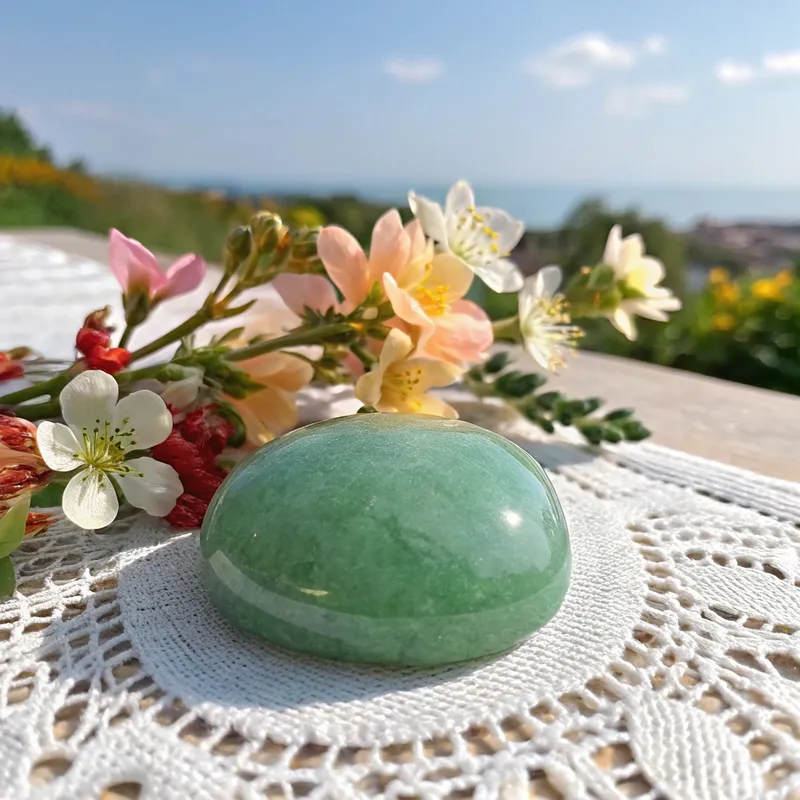
Aventurine Meaning and Properties.
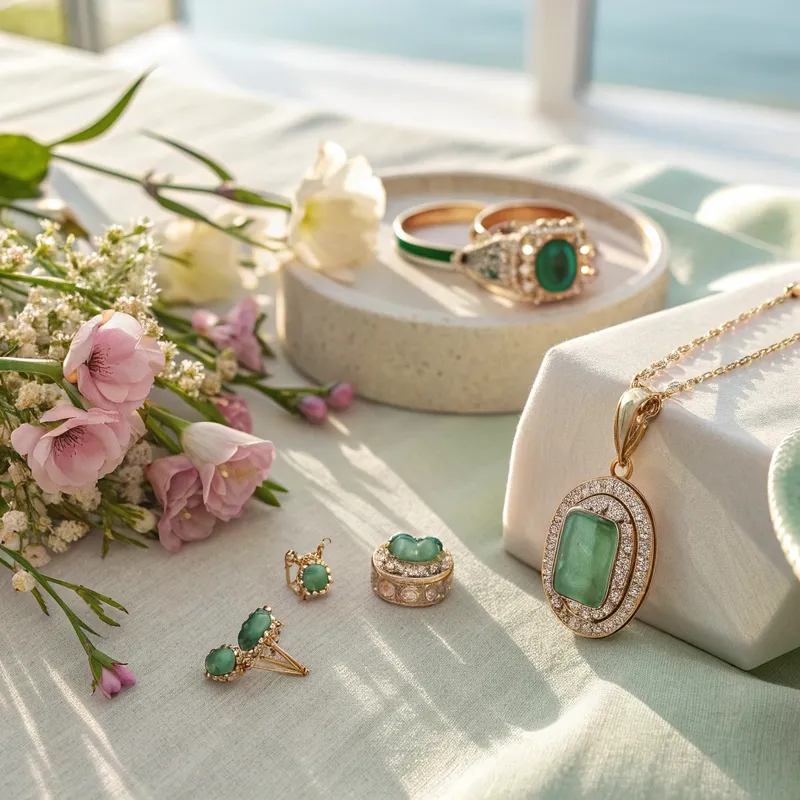
Aventurine is one of the few minerals that instantly captures attention with its characteristic shimmering sparkle. Countless microscopic inclusions reflect light in different directions, creating a soft, star-like glow that looks almost magical. Because of this effect, aventurine has been associated for centuries with luck, opportunity, prosperity, creativity, and a sense of inner openness. In many cultures it is considered a stone of new beginnings — one that helps a person notice chance, seize opportunities, and move confidently toward personal success.
Although aventurine is widely used today in jewelry, talismans, décor items, meditation tools, and Feng Shui practices, its reputation did not appear overnight. The stone has a long history, evolving from a rare, visually intriguing natural mineral into a symbolic object with cultural, psychological, and energetic significance.
To understand aventurine fully, it is important to view it simultaneously from several angles: as a natural material formed by geological processes, as a cultural symbol of fortune and vitality, and as an energy-oriented stone associated with specific zodiac signs and personality traits.
Origin of the Name and Visual Character of the Stone
The name “aventurine” is believed to come from the Italian expression a ventura, meaning “by chance,” “by good fortune,” or “accidentally.” According to one historical account, Venetian artisans in the 17th century accidentally spilled tiny metallic particles into molten glass. The cooled material sparkled with thousands of glittering fragments — a beautiful effect that immediately attracted attention and later became known as “goldstone.” When natural quartz with a similar shimmering quality was discovered, it received a name referencing this “fortunate accident.” Over time, natural aventurine became even more valued than the man-made glass that inspired its name.
The hallmark of this mineral is aventurescence — a shimmering optical phenomenon caused by reflective inclusions inside the stone. Depending on the chemical composition and the type of inclusions, the sparkle can appear golden, silvery, reddish, bluish, or greenish. When light hits the stone, the internal particles catch the rays and create a gentle, lively radiance. This visual complexity gives aventurine both elegance and a sense of dynamic inner life, as if the stone is constantly in motion.
In its most traditional form, aventurine is green. However, nature produces many variants — from warm honey-colored and orange stones to deep blue and even black types. This diversity makes aventurine a universal stone, matching many tastes, styles, and energetic intentions.
Aventurine as a Symbol of Luck and Personal Expansion
Since ancient times, aventurine has been considered a stone that “opens doors.” In many cultures, it was believed to increase the likelihood of fortunate events, attract opportunities, and help a person navigate situations where intuition and timing matter. It was carried by travelers, merchants, artisans, and later — by artists and inventors seeking inspiration.
Modern psychological interpretations compare aventurine to a confidence trigger — a symbolic object that helps a person shift from passivity to action. Because of its calming yet invigorating appearance, it is often described as a stone that supports personal growth, reduces fear of change, and strengthens the ability to make independent decisions.
These associations make aventurine especially appealing to people who:
- start new projects
- move to a new place
- build a business
- develop creative talents
- wish to restore emotional balance
- want to become more decisive and optimistic
For many, an aventurine amulet or bracelet becomes a daily reminder to stay open to positive changes.
Aventurine and Personality: Psychological Perspective
From the psychological point of view, aventurine symbolizes balance between rationality and spontaneity. It does not represent reckless risk but rather a healthy readiness to step beyond the comfort zone. Because of this, the stone is often recommended for individuals who struggle with self-doubt, overthinking, emotional rigidity, or fear of taking responsibility.
Its visual sparkle creates a small but constant sensory stimulus that can evoke a subtle uplifting effect. Many people report that wearing aventurine helps them feel more centered, confident, and flexible. Whether or not one believes in metaphysical properties, this emotional association alone can make the stone effective as a personal symbolic tool.
The color of aventurine also plays a role:
- Green aventurine is linked with renewal, calmness, healing energy, and openness.
- Red or orange aventurine symbolizes motivation, vitality, and dynamic movement.
- Blue aventurine relates to clarity, mental focus, and balanced communication.
- Black aventurine is associated with grounding and emotional resilience.
These color-based impressions are deeply rooted in both cultural symbolism and chromotherapy, making aventurine a psychologically meaningful stone.
Aventurine and Zodiac Compatibility (General Introduction)
Aventurine is widely discussed in the context of zodiac compatibility — not as an astrological prediction tool but as a symbolic match between a stone’s qualities and certain character tendencies found in zodiac archetypes. This practice is popular in modern gemology guides, holistic lifestyle literature, and personal development traditions.
Green aventurine is especially noted as a stone for:
- Virgo — supporting stability, calm, analytical clarity
- Taurus — enhancing a sense of balance, comfort, and material security
- Gemini — encouraging flexibility, sociability, and creativity
- Cancer — providing emotional harmony and reducing anxiety
- Libra — supporting equilibrium and constructive communication
However, aventurine is considered a universal stone, meaning it can suit any zodiac sign depending on personal goals, emotional needs, and the type of aventurine chosen. Later sections of the full article will explore compatibility with each zodiac sign in detail.
Energy and Cultural Symbolism: A Broad Perspective
Throughout history, aventurine has been used in various cultural practices:
- In ancient China it symbolized leadership and inner strength.
- In India green aventurine was linked to the heart chakra and emotional harmony.
- In Tibetan culture it was used in ritual objects and decorative elements on statues.
- In medieval Europe it became a stone of wanderers and adventurers.
Because of its glittering surface, aventurine was often associated with the stars and the idea of destiny or guiding light. Symbolically, it represented the belief that luck favors those prepared to recognize it.
Today aventurine remains a popular stone for meditation, self-development practices, Feng Shui environments, and personal talismans. It is valued both aesthetically and symbolically, retaining its centuries-old reputation as a stone that helps a person open their life to opportunities.
Physical and Chemical Properties of Aventurine
Aventurine is often perceived primarily as a decorative or mystical stone, yet from a scientific perspective it is a fascinating mineral with a complex internal structure. Understanding its physical and chemical properties allows us to appreciate why aventurine displays its characteristic shimmer, how durable it is in everyday use, and what makes it distinct from other quartz varieties. Although it is frequently categorized alongside ornamental stones, aventurine is, in essence, a type of quartz — one of the most abundant and geologically significant minerals on Earth.
Its appearance, durability, internal texture, and the unique glittering effect known as aventurescence are all the result of specific geological processes. These processes combine microscopic inclusions with a silica-rich matrix, creating an optical phenomenon found in only a few natural minerals.
Mineralogical Classification
Aventurine belongs to the quartz family, specifically the microcrystalline (or cryptocrystalline) varieties. However, its grain size is typically larger than in chalcedony, placing it in a transitional category between microcrystalline and fine-grained quartz aggregates.
Main classification features:
- Mineral group: Silicates
- Subclass: Tectosilicates
- Chemical formula: SiO₂ (silicon dioxide)
- Crystal system: Trigonal
- Structure: Intergrown aggregates of quartz with reflective inclusions causing aventurescence
Despite quartz being one of the most stable and widespread minerals on Earth, aventurine remains relatively rare because its distinctive sparkle requires the simultaneous presence of quartz and specific types of metallic or mica-based inclusions.
Chemical Composition
The base chemical composition of aventurine is silicon dioxide (SiO₂), identical to all quartz varieties. However, the stone’s color and shimmering effect depend on impurities, inclusions, and trace elements.
Typical chemical components and trace elements:
- Silicon dioxide (SiO₂): 90–99%
- Fuchsite (Cr-rich mica): Present in many green aventurines
- Hematite: Strong reddish-brown sparkle
- Goethite or Lepidocrocite: Golden to yellow inclusions
- Ilmenite or Magnetite: Dark, metallic sparkles
- Copper-bearing minerals: Contribute to warm golden or reddish hues
The diversity of these inclusions results in the wide color spectrum of natural aventurine — from greens to reds, golds, blues, and even blacks.
Aventurescence: The Optical Signature of Aventurine
The visual phenomenon that defines aventurine is known as aventurescence — a shimmering, glitter-like effect caused by reflections from thin, plate-like mineral inclusions suspended within the quartz mass.
Key characteristics of aventurescence:
- It occurs when light hits reflective inclusions oriented in multiple directions.
- Larger inclusions produce stronger sparkles, while smaller ones create a soft, velvety glow.
- The density and type of inclusions determine both the hue and the brilliance.
- The effect is visible even under diffused light, making aventurine lively and visually dynamic.
The optical uniqueness of aventurine places it among a small group of gemstones exhibiting reflective internal phenomena, such as sunstone and goldstone, though aventurine’s shimmer tends to be finer and more subtle.
Color Variations and Their Mineral Sources
While green aventurine is the most famous and widespread variety, the stone occurs in several distinct colors depending on the dominant inclusions.
1. Green Aventurine
- Main inclusions: Fuchsite (chromium-bearing mica)
- Appearance: Soft to intense green with silvery or slightly golden sparkle
- Energy association: Renewal, calm, heart chakra, emotional stability
This is the most traditional form of aventurine and the one most often associated with luck and prosperity.
2. Red and Orange Aventurine
- Main inclusions: Hematite, goethite, and sometimes iron oxide
- Appearance: Warm tones from terracotta to deep red with golden sparkle
- Energy association: Vitality, motivation, emotional strength
These types are rarer than green aventurine and often misidentified as other red-hued quartz varieties.
3. Blue Aventurine
- Main inclusions: Dumortierite and various iron silicates
- Appearance: Blue-gray to deep navy with subtle silver or bluish glints
- Energy association: Focus, clarity, balanced communication
Blue aventurine typically has finer inclusions, resulting in a softer shimmer.
4. Yellow and Golden Aventurine
- Main inclusions: Goethite, mica, and iron-rich particles
- Appearance: Sunshine-yellow or honey-gold with bright sparkle
- Energy association: Optimism, creativity, personal expression
5. Black Aventurine
- Main inclusions: Ilmenite, magnetite, and carbon compounds
- Appearance: Deep black with subtle silver points of light
- Energy association: Protection, grounding, stability
These varieties highlight the remarkable diversity and mineralogical complexity of aventurine.
Physical Properties
Although aventurine is visually gentle and shimmering, it is a relatively durable stone, suitable for jewelry and everyday wear with moderate care.
Hardness
- Mohs hardness: 6.5–7
This makes aventurine hard enough to resist scratching from most everyday objects, though it can be scratched by materials such as topaz, corundum, or diamond.
Fracture and Tenacity
- Fracture: Conchoidal to uneven
- Tenacity: Brittle
Because aventurine is an aggregate stone with multiple inclusions, it may chip if subjected to strong impact, especially along zones with concentrated inclusions.
Luster
- External luster: Vitreous (glassy)
- Internal luster: Sub-metallic sparkle due to inclusions
The combination of quartz luster and reflective particles gives aventurine its layered visual depth.
Transparency
- Generally translucent, occasionally opaque
Clear transparency is rare, as inclusions naturally scatter light inside the stone.
Specific Gravity
- Density: Typically 2.64–2.69 g/cm³
This density is characteristic of quartz but varies slightly depending on the type and amount of metallic inclusions.
Internal Structure and Formation
Aventurine is formed in metamorphic and, less commonly, hydrothermal environments. Over long geological periods, silica-rich fluids crystallize into quartz while simultaneously trapping iron oxides, micas, and other reflective minerals.
Key geological processes involved:
- Silica-rich fluids fill cavities and fractures in rock.
- Slow crystallization of quartz occurs, allowing inclusions to disperse evenly.
- Metallic or mica-based minerals enter the silica mass, forming thin plates or flakes.
- Pressure and temperature changes solidify the aggregate, creating the aventurine texture.
The delicate arrangement of inclusions is what makes aventurine visually distinct. Too many inclusions produce a muddy appearance, while too few result in weak aventurescence. The most valued specimens show a balanced, harmonious distribution.
Durability and Practical Use Characteristics
Aventurine is durable enough for most types of jewelry, but its internal structure means it must be protected from:
- sharp impacts
- sudden temperature changes
- prolonged exposure to harsh chemicals
It is especially well suited for:
- beaded bracelets
- cabochon rings and pendants
- carved amulets
- massage stones
- ornamental figurines
The stone’s durability combined with its captivating shimmer makes it versatile yet elegant.
Why Aventurine Is Unique Among Quartz Varieties
Although aventurine is closely related to other quartz types, it stands out for several reasons:
- Its aventurescence is natural, not the result of surface polishing or artificial treatment.
- It contains distinct reflective minerals, making every specimen unique.
- Its color diversity surpasses that of many decorative quartz stones.
- It has both aesthetic and metaphysical significance, giving it a dual cultural value.
This combination of beauty, durability, and symbolic meaning explains why aventurine remains one of the most beloved stones in both jewelry and spiritual practices.
Mining and Extraction of Aventurine
Aventurine, despite being a variety of quartz, is not mined as widely as more common silicate minerals. Its extraction requires specific geological conditions that allow quartz to co-crystallize with reflective inclusions such as mica, hematite, or goethite. These conditions limit the number of viable deposits, making aventurine a semi-rare ornamental stone rather than a mass-market industrial mineral. The mining process itself varies depending on the formation environment, depth of occurrence, and commercial demand for different colors of aventurine.
Understanding the mining geography and the methods used in extraction provides greater insight into why certain types of aventurine are more expensive or rare, how the stone reaches the global market, and what environmental and economic considerations accompany its production.
Global Distribution of Aventurine Deposits
Aventurine deposits are found on several continents, but only a few regions produce high-quality stones with strong aventurescence. The presence of specific mica varieties, iron oxides, or other reflective minerals determines the hue and value of the extracted material.
1. India (Karnataka, Tamil Nadu, Andhra Pradesh)
India is the world’s largest producer of aventurine, especially green aventurine with vibrant color and strong shimmer. The deposits of Mysore and near Chennai are historically significant and continually yield vast quantities of raw stone.
- Green aventurine from India is colored predominantly by chromium-rich fuchsite.
- The material is widely used for beads, cabochons, statues, and interior tiles.
- Indian aventurine is known for its dense sparkle and uniform distribution of inclusions.
Because of its abundance, Indian green aventurine is often the most accessible and affordable on the global market.
2. Brazil (Minas Gerais, Bahia)
Brazil is another major source of aventurine, producing green, blue, and reddish varieties.
- Brazilian deposits are rich in mica- and iron-inclusion stones.
- The quality varies from industrial-grade material to gemstone-quality.
- Blue aventurine from Brazil, enriched with dumortierite, is especially valued for its cool, calm appearance.
Brazil’s mining industry is technologically developed, which allows extraction with relatively minimal waste and high yield.
3. China (Xinjiang, Hebei, Inner Mongolia)
China produces large volumes of aventurine for domestic manufacturing and export.
- Chinese deposits supply green and golden aventurine varieties.
- Many Chinese stones undergo additional polishing or treatment for the decorative market.
- Some lower-grade stones are further processed into reconstituted or compressed aventurine blocks for carving and interior design.
4. Russia (Ural Mountains, Karelia, Altai)
Russia has historic aventurine deposits, especially in the Ural region.
- Russian green aventurine often contains coarse fuchsite inclusions, producing strong sparkling textures.
- Karelia is known for dark-green and gray-green stones.
- Altai deposits produce reddish and brownish aventurine with iron oxide content.
Russian material is valued in sculpture, carving, and traditional crafts.
5. Other Deposits (United States, Nepal, Austria, Tanzania)
Smaller deposits appear around the world:
- United States: Colorado and Vermont offer limited quantities of green aventurine.
- Nepal: Produces blue-green material used in Himalayan crafts.
- Austria: Yields historically significant green aventurine.
- Tanzania and Kenya: Produce reddish aventurine with warm, earthy tones.
These sources do not dominate the global market but contribute to its variety.